
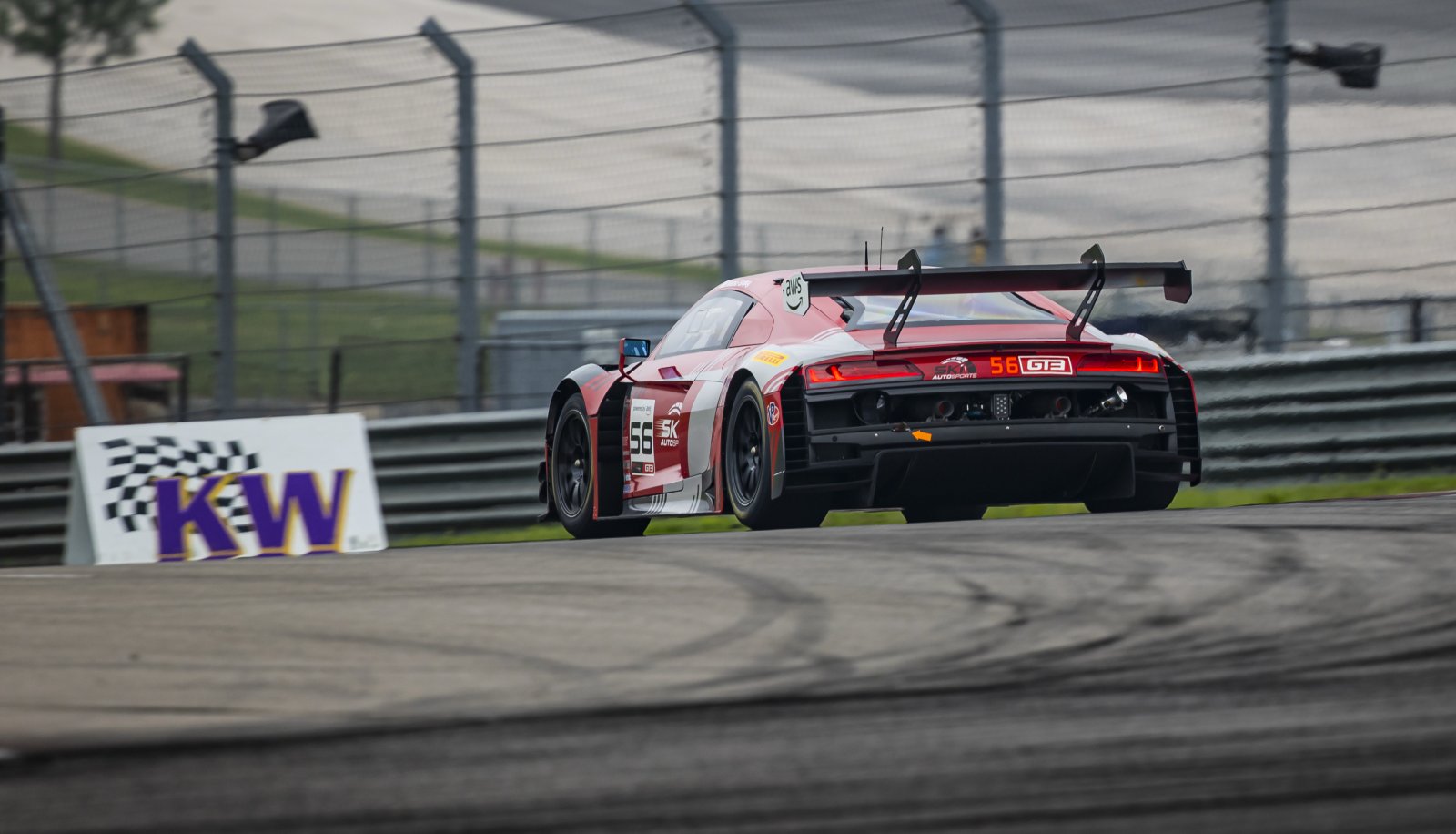
With up to six different championships battling it out on track across any given SRO America race weekend, there’s a lot on track to keep track of. Between GT3, GT2, GT4, and touring car machinery, in addition to single-make series, there’s always something in motion. While speed and sound are often the elements that steal the spotlight in racing, less obvious but equally critical is the suspension working underneath every car. It quietly works away and manages thousands of pounds of force while providing drivers with the confidence to push themselves, and their machines, to the limit.
That’s where KW Suspension comes in. As a highly recognizable name in chassis performance, their dampers and suspension systems are found on machinery across the paddock, ranging from Touring Car competition, to GT World Challenge America, and everything in between. However, while they all compete on the same track, the suspension systems beneath them can be vastly different.
The suspension requirements for a Touring Car differ dramatically from those of a GT3 machine. While some TC and GT4 entries have suspension layouts that are similar to their production-car origins, GT3 cars often feature highly optimized and reconfigured suspension designs intended to maximize geometry, adjustability, and performance.
Regulations play a major role in determining what is possible. As a result, KW develops solutions tailored to the unique demands of each category rather than applying a one-size-fits-all approach. What works on a front-wheel-drive touring car will not be the same approach required for a GT3 car capable of generating enormous cornering loads.
When most people think of suspension, they often picture the damper or shock absorber alone. In reality, a complete racing suspension package is an interconnected system composed of numerous components working together such as dampers, springs, top mounts, helper springs, bump stops, spring perches, adjustment hardware, and various mounting components. All of these elements contribute to how a car behaves, and each one influences the others, making it a proper challenge for teams and engineers to determine the ideal balance.
Developing a successful package requires understanding how the suspension interacts with virtually every other aspect of the vehicle. Tire characteristics, chassis stiffness, aerodynamic loads, weight distribution, and intended vehicle use should all be factored into the equation. While achieving maximum grip is part of it, creating a platform that is predictable and inspires confidence for the driver is even more important in order to consistently extract performance. Having trust in the car can be attributed to, in part, a suspension package that behaves predictably over long stints, responds appropriately to setup changes, and remains adaptable depending on needs and circumstances.
KW Suspension engineers will thus spend a lot of time on simulations, testing, and data analysis to find the best damping, spring rates, and adjustment options to create systems that offer both performance and usability for customers competing at every level of the sport.
Another thing they need to keep in mind is the different demands that are created by the various tracks on the calendar. None are exactly the same, and they all place their own demands on suspension systems.
A smooth, flowing circuit, like Barber Motorsports Park for example, requires precise chassis control and the ability to manage increased cornering forces. With fewer bumps disrupting the platform, suspension tuning becomes heavily focused on maximizing grip while maintaining aerodynamic stability. On the other hand, a place like Sebring International Raceway presents a completely different challenge.
Widely regarded as one of the harshest circuits in North America for suspension components, Sebring's notoriously rough surface subjects cars to relentless impacts lap after lap. Dampers must absorb substantial vertical loads while ensuring the tires remain planted on the racing surface. The constant punishment places an extraordinary amount of stress on not only the suspension, but the vehicle as a whole, and the racer driving it. For suspension engineers, durability and flexibility becomes just as important as outright performance. Components must continue operating as intended despite hours of relentless punishment from big bumps, sudden changes, and constant aggressive motions.
Beyond the demands of the tracks themselves, teams rely on suspension packages to deliver repeatable performance from one session to the next, allowing engineers and drivers to make informed setup decisions. Even minor variations between dampers can influence vehicle behavior and complicate the tuning process.
Therefore, KW ensures that every damper undergoes extensive quality-control procedures during manufacturing. Components are built to precise specifications before being tested and evaluated against established performance metrics, and from there the engineers review the data to ensure each damper meets the appropriate targets.
When putting together a set of dampers, it’s important that all four work together as a balanced system. For pro racing teams, keeping that consistency over time matters just as much as being able to handle unpredictability. This can be achieved through regular service and inspection, as well as retesting to help ensure the dampers keep performing all season.
Throughout SRO race weekends around the world, KW engineers work directly with teams to help optimize vehicle performance. Driver feedback, telemetry data, tire performance, and changing track conditions are all analyzed to identify potential setup improvements and fix problems quickly. Based on this exchange of information, they are then able to suggest changes to damper settings, spring choices, ride heights, and the overall suspension setup.
Trackside support also ensures teams have access to spare parts, technical expertise, and rapid service when issues do arise. If parts need to be checked or replaced, the onsite factory support helps teams get back on track quickly and stay competitive. Their presence also provides teams with confidence that their suspension package is operating at its full potential.
Whether it’s braking zones, corner entries, acceleration phases, or variations in surface conditions, everything ultimately connects back to the suspension's ability to manage forces and maintain tire contact with the track. KW Suspension's role in SRO America competition extends far beyond the hardware itself. Through engineering development, quality control, and trackside support, their partnership and direct involvement helps teams transform potential into performance.